AWS & DevOps Training in Chennai – Toolchain, Career Scope & Placement Assistance (2026 Guide)
.jpg.jpeg)
Cloud computing and DevOps are not optional skills in 2026. Every modern company - from startups to enterprise IT firms - depends on cloud infrastructure, automation, CI/CD pipelines and containerized deployments to stay competitive.
If you are looking for AWS and DevOps training in Chennai, this guide explains the complete toolchain, structured curriculum, real-time project-based learning approach, career scope and placement support model - without making unrealistic claims.
Why AWS & DevOps Skills Are in High Demand in 2026
Companies are moving their infrastructure to the cloud because manual deployments waste time and increase risk. DevOps closes the gap between development and operations by automating processes and standardizing workflows.
Amazon Web Services leads the global cloud market. When teams combine AWS with DevOps tools, they achieve:
- Faster software releases
- Automated infrastructure management
- Continuous integration and deployment
- Scalable cloud architecture
- More secure production environments
Chennai's IT ecosystem - including SaaS startups, fintech firms, healthcare tech companies and product-based organizations - actively implements AWS and DevOps practices to stay competitive and reduce operational inefficiencies.
What Is Covered in an AWS & DevOps Course (2026 Updated Syllabus)
A structured AWS DevOps course in Chennai must cover both cloud fundamentals and automation tools. If the program skips major components, it delivers incomplete training and leaves critical skill gaps.
1. Linux Fundamentals
Linux forms the foundation of DevOps.
The curriculum should cover:
- Linux commands
- File system management
- User and permission management
- Process management
- Package installation
- Shell scripting fundamentals
If you are not comfortable working on the Linux command line, DevOps will become unnecessarily difficult and slow you down in real-world environments.
2. Git & Version Control
Version control is essential for managing source code effectively.
The training should cover:
- Git installation
- Creating and managing repositories
- Branching and merging strategies
- Handling pull requests
- Resolving merger conflicts
- Integrating with GitHub
Without proper version control practices, teams lose track of changes, break collaboration and create avoidable production issues.
To gain strong version control skills and hands-on project experience in Git, Learn more about Git & GitHub training.
3. AWS Cloud Fundamentals
A serious AWS DevOps program must cover core AWS services in depth — not just theory, but configuration, security and troubleshooting.
Amazon Web Services core services should include:
- EC2 (Elastic Compute Cloud) – Virtual servers for compute workloads
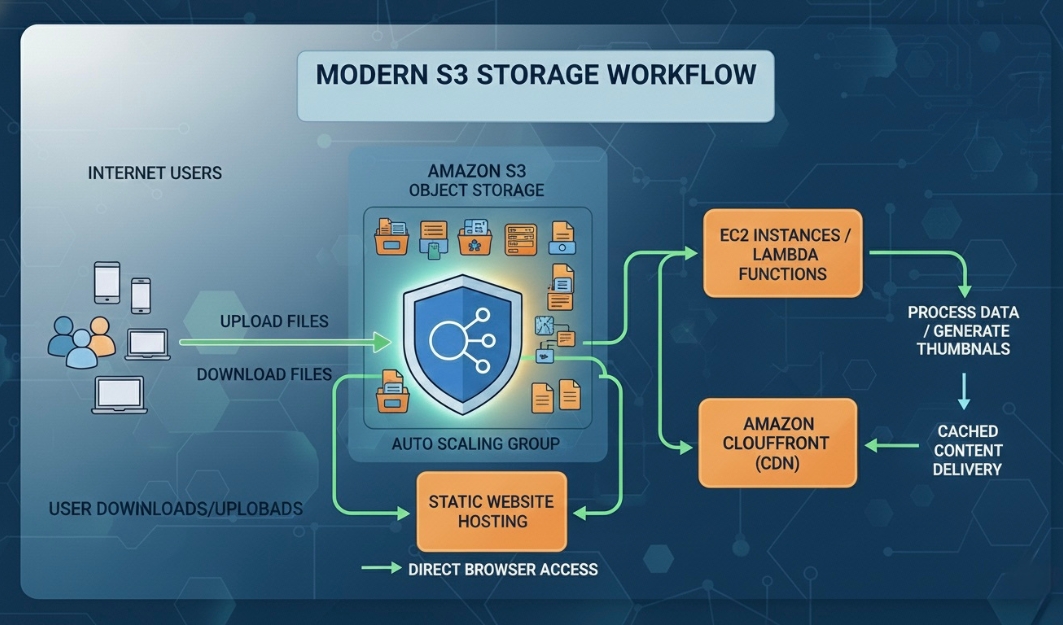
- S3 (Simple Storage Service) – Scalable object storage
- IAM (Identity and Access Management) – User roles and permissions control
- VPC (Virtual Private Cloud) – Network isolation and architecture design
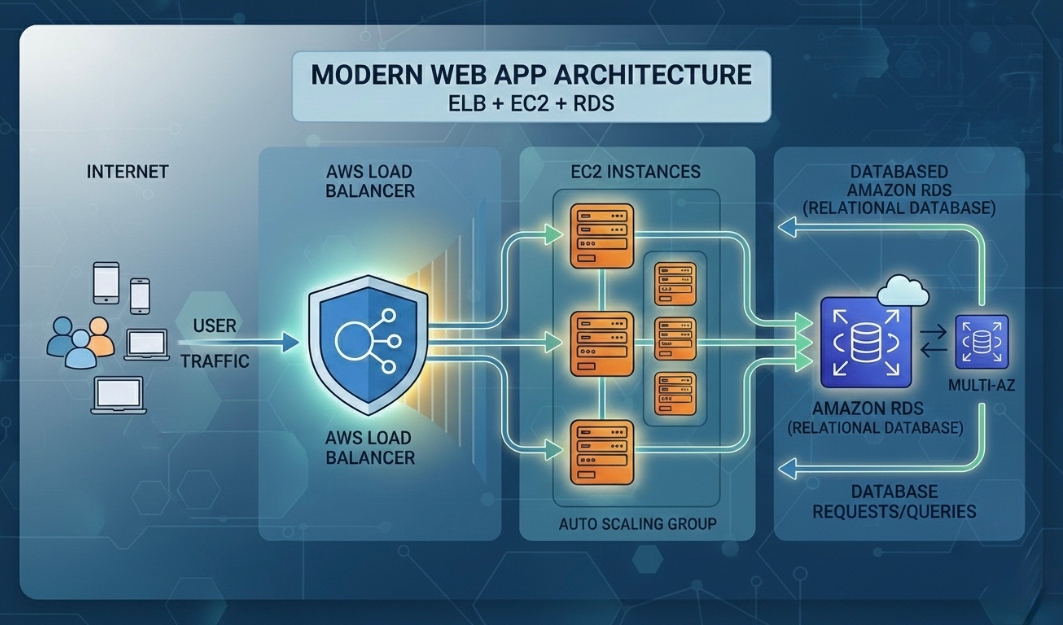
- RDS (Relational Database Service) – Managed database solutions
- CloudWatch – Monitoring and logging
- Elastic Load Balancing – Traffic distribution across instances
- Auto Scaling – Automatic resource scaling based on demand
Training must center on real-world cloud architecture deployment scenarios - multi-tier architecture, secure networking, monitoring setup, high availability and cost optimization. If students only learn definitions instead of implement it, the course fails its purpose.
4. CI/CD Pipeline – Jenkins
Automation drives DevOps. Without it, you're just doing manual system administration with a fancy title.
The training must cover:
- Installing and configuring Jenkins
- Creating and managing pipelines
- Automating builds
- Implementing continuous integration
- Implementing continuous deployment
- Integrating Jenkins with GitHub
Jenkins enables teams to automate build, test and deploy workflows instead of pushing code manually. This is the exact point where repetitive, error-prone deployments stop - and structured, reliable automation begins.
5. Docker – Containerization
Modern applications rely on containers to maintain consistency across development, testing and production environments.
The curriculum should include:
- Docker installation and setup
- Creating and managing Docker images
- Running and managing Docker containers
- Writing Dockerfiles
- Integrating with Docker Hub
Docker allows teams to package applications with their dependencies, ensuring portability across environments and enabling scalable deployments. Without containerization, environment-related issues will continue to slow down releases and create instability.
6. Kubernetes – Container Orchestration
For large-scale deployments, Kubernetes is not optional - it's critical.
The program must cover:
- Kubernetes architecture
- Pods and services
- Deployments
- Scaling strategies
- YAML configuration files
Kubernetes manages containerized applications at scale, handles self-healing, load distribution and automated rollouts.
If someone claims to be "DevOps-ready" but cannot deploy and scale applications using Kubernetes, they are operating at a basic level. This tool clearly separates entry-level profiles from advanced, production-ready engineers.
7. Infrastructure as Code – Terraform
Automating infrastructure setup is non-negotiable in modern DevOps. Manual provisioning wastes time and introduces avoidable mistakes.
The curriculum must cover:
- Terraform fundamentals
- Writing and structuring configuration files
- Provisioning AWS infrastructure programmatically
- Managing and securing state files
Terraform enables Infrastructure as Code (IaC), which standardizes environments, improves deployment speed and drastically reduces configuration errors. If infrastructure cannot be recreated with code, it is fragile and not production-ready.
Real-Time Project-Based Training Approach
Structured AWS and DevOps training does not confine learners to predefined demo projects. It equips them to independently deploy and manage real-world environments from scratch.
The program trains learners to:
- Launch and configure AWS servers
- Build and manage CI/CD pipelines
- Containerize applications effectively
- Deploy multi-tier architectures
- Automate infrastructure provisioning
The focus is clear: develop engineers who can execute real-time DevOps projects without relying on scripted instructions. Independent execution builds real confidence, practical competence and genuine job readiness - not just theoretical knowledge.
Career Scope After AWS & DevOps Training in Chennai
Cloud adoption in India continues to accelerate because companies want scalability, cost control and faster deployments. Organizations that ignore cloud infrastructure fall behind.
Common job roles include:
- DevOps Engineer
- AWS Cloud Engineer
- Cloud Support Engineer
- Site Reliability Engineer (SRE)
- Build and Release Engineer
- Cloud Infrastructure Engineer
Industrial hiring in Chennai includes:
DevOps skills apply across industries because every company that builds or deploys software depends on automation, infrastructure management, monitoring and scalable cloud environments. If software runs somewhere, DevOps expertise is required to keep it stable, secure and efficient.
Placement Assistance & Career Support
Professional training institutes should provide structured placement assistance, which can include:
- Supporting resume building
- Optimizing LinkedIn profiles
- Conducting mock technical interviews
- Preparing students for aptitude tests
- Guiding interview scheduling
- Assisting with job referrals
Placement assistance improves interview readiness, but it does not replace skill mastery. Without consistent practice and strong technical competence, no amount of support will secure the job.

AWS DevOps Career Opportunities in 2026